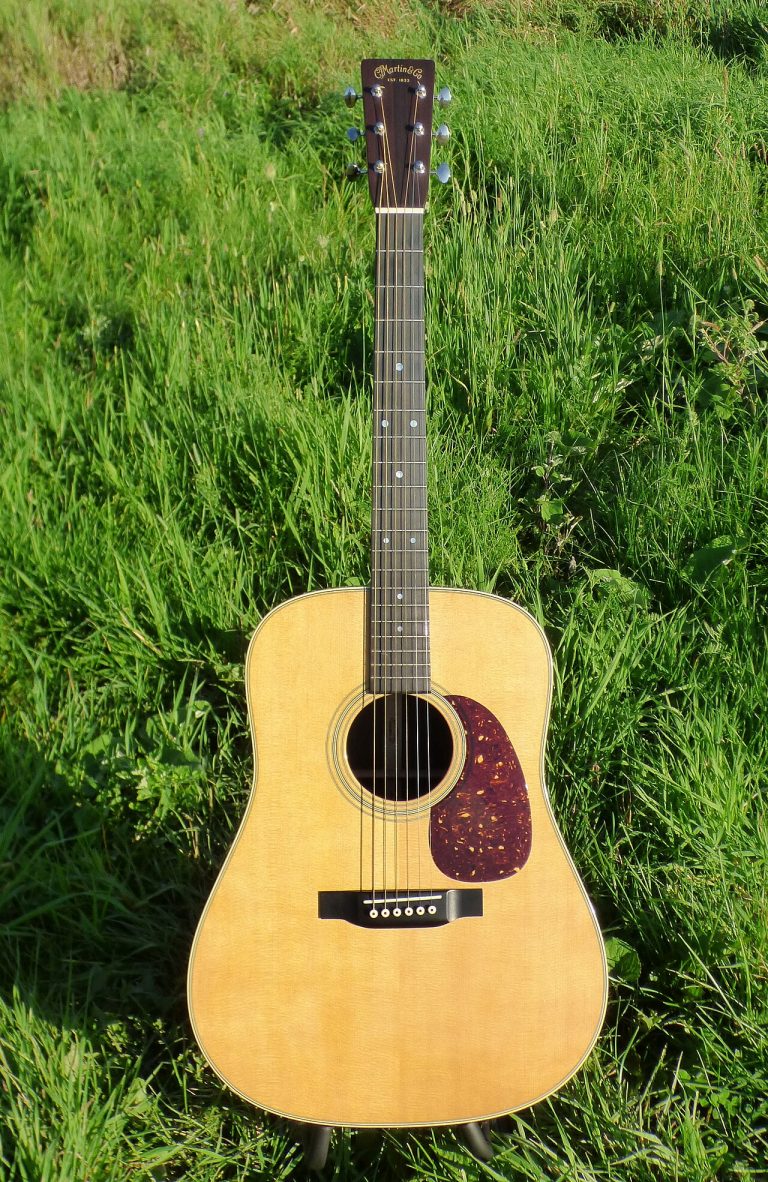


A friend of mine walked into a shop in Corso di Porta Ticinese last autumn, pointed at the cheapest acoustic on the wall, and walked out ninety euros lighter. Three months later the neck had bowed, the strings buzzed against every fret above the fifth, and she had quietly shelved the instrument next to a yoga mat she never used. Her mistake was not the price. It was buying the first guitar she saw without a single diagnostic check.
Choosing a first guitar in 2026 is a better experience than it was a decade ago, partly because the floor of the market has risen. Budget instruments from Yamaha, Cort, Harley Benton, Epiphone, and Squier now play acceptably out of the box. But the ceiling of regret is still there, and it still catches beginners who walk into shops armed with nothing but enthusiasm.
Start with the body, not the brand
Before you look at a price tag or a logo on a headstock, ask yourself a more basic question: what kind of sound do you want coming out of the thing in your hands? Acoustic, classical, and electric are three different instruments that happen to share six strings.
A classical guitar has nylon strings, a wider neck, and a warm, round tone. It is physically gentle on fingertips, which matters during the first three weeks when everyone quits. It is the obvious choice if you gravitate toward Paco de Lucía, bossa nova, or fingerpicked ballads. The wider fretboard can feel enormous to small hands, which is why many teachers quietly disagree about whether it is truly the “beginner” default.
A steel-string acoustic is louder, sharper, and more versatile. It suits folk, singer-songwriter strumming, and most pop. The strings are harsher on calluses in the first month, but the neck is narrower and the feedback you get from a chord is immediate.
An electric is the easiest instrument to play physically. The action is lower, the strings are thinner, and there is no acoustic projection to overcome. The catch is that you need an amplifier, a cable, and a power outlet, which means a second hidden cost and a less spontaneous instrument. If you imagine yourself picking it up while the coffee brews, an electric will not deliver that.
The six tests to run on any guitar before you pay
Any guitar in your hands, whether in a shop or a friend’s living room, should pass six checks before the card comes out. This is the part most beginners skip.
- Tuning stability. Tune all six strings, strum hard for a minute, then check again. On cheap tuners, the G string will already be flat. Walk away.
- Action at the twelfth fret. The distance between the string and the fret at the twelfth marker should be around 2.0 to 2.5 millimetres for steel-string and electric, a touch higher for classical. More than 3.5 mm and the guitar will fight you.
- Fret buzz. Play every note on every fret, one at a time. If any buzz, the neck needs adjustment or the frets are poorly levelled.
- Intonation. Play the harmonic at the twelfth fret, then fret the note at the twelfth fret. The two pitches should match. If the fretted note is noticeably sharper, the guitar cannot play in tune with itself.
- Neck relief. Look down the fretboard from the headstock like a pool cue. A slight forward bow is normal. A twist or wave is not.
- Weight and balance. Sit with it. Stand with it. If it slides off your leg or the headstock dives toward the floor on a strap, the ergonomics are wrong for you regardless of spec sheet.

A reality check on price tiers
The honest market in April 2026 sorts roughly into four tiers. Below 120 euros, you are buying a wall decoration. Between 180 and 350 euros, you are buying a real instrument that will survive a year of practice. Between 400 and 800 euros you are in the zone where the build quality becomes a non-issue and the instrument rewards improvement. Above that, you are paying for wood, history, and feel, and those returns diminish quickly for a beginner.
| Budget | Classical | Steel-string acoustic | Electric |
|---|---|---|---|
| Under 200 € | Yamaha C40 II | Yamaha F310 | Squier Sonic Stratocaster |
| 200-400 € | Alhambra 1C HT | Fender CD-60S | Squier Classic Vibe 50s |
| 400-700 € | Cordoba C7 | Taylor Academy 10 | Epiphone Les Paul Standard |
| Over 700 € | Alhambra 4P | Martin LX1E | Fender Player II Stratocaster |
Scale length, neck profile, and fingerboard radius
The three specifications beginners most often ignore are the three that most shape whether a guitar feels right in the hand. They are worth understanding in plain terms before you walk into a shop.
Scale length is the distance between the nut and the bridge saddle – in practice, the vibrating length of the string. A longer scale produces more string tension at a given pitch, which gives a tighter, brighter sound but harder pressing. A shorter scale is more forgiving for small hands. Most steel-string acoustics are built at 25.5 inches (648 mm), the Martin standard. Classical guitars sit at 650 mm. Fender electrics use 25.5 inches (648 mm); Gibsons and their Epiphone equivalents use 24.75 inches (629 mm), which is why a Les Paul feels slinkier under the fingers than a Stratocaster strung with identical gauges. The Squier Mini Stratocaster, at 22.75 inches (578 mm), is a common children’s-model size that also suits teenage beginners with small hands.
Neck profile is the cross-section shape of the back of the neck. Modern profiles range from thin “slim C” shapes, which suit players who wrap their thumb over the top and play chords from the palm, to chunkier “soft V” or “vintage C” profiles that reward a classical thumb-behind technique. There is no objectively superior profile; there is only what fits your hand. Play a slim C Ibanez neck and a thicker Gibson neck back to back in any shop and the difference is obvious.
Fingerboard radius is the curvature across the width of the fretboard. A flatter radius (12 inches to 16 inches, or fully flat on classical guitars) suits lead soloing and big bends without fretting out. A rounder radius (7.25 inches or 9.5 inches on older Fender designs) suits chord playing and feels more enveloping to the fretting hand. Most modern entry-level electrics use compromise radii around 9.5 to 12 inches. If you have no strong preference yet, a 12-inch or compound radius fingerboard is the safest default.
Model-by-model recommendations and what each one does well
Rather than repeat the earlier budget table, this section goes slightly deeper into why specific models earn their reputations. Every guitar listed here is one I have either played personally in shop settings or had extensive feedback on from students at the school where I teach in Milan.
Yamaha FG800 (around 220 euros). The reference entry-level steel-string acoustic for a decade. Solid spruce top, nato back and sides, reliable tuners, and a bright tone that survives aggressive strumming. It will not sound like a Martin, but it will not fight you, which is the single most important quality in a first acoustic. The FG820 adds a cutaway and mahogany back for around 40 euros more; the improvement is marginal for beginners.
Yamaha F310 (around 150 euros). The quieter, cheaper sibling. Laminate top rather than solid, which limits its tonal ceiling, but the build quality is consistent and the playing action is beginner-friendly out of the box. If budget is tight, this is the honest floor of the usable-acoustic market.
Taylor Academy 10 (around 650 euros). Worth naming here for readers with a larger budget. The armrest bevel makes the guitar dramatically more comfortable during long practice sessions; the solid Sitka spruce top ages beautifully with play; the satin-finish neck is the most beginner-friendly profile in the Taylor lineup. It is also the guitar I most often see beginners keep rather than upgrade.
Epiphone DR-100 (around 175 euros). A dreadnought built around the classic Gibson-adjacent aesthetic. Tonally less refined than the Yamaha FG800 but physically imposing in the way a first guitar should feel. Pick it if you want a steel-string with some visual weight to it.
Squier Sonic Stratocaster (around 180 euros). The successor to the Bullet line, offering a genuinely usable Stratocaster experience with a thin C-shape neck and three single-coil pickups. The tuners will drift until you upgrade them, but everything else plays in tune and stays there under practice conditions.
Yamaha Pacifica 112V (around 340 euros). The quiet secret of the beginner electric market. HSS pickup configuration, coil-split capability on the humbucker, locking-style tuners, and a build quality that punches well above its price point. Many working guitarists keep one as a second or travel instrument.
Yamaha C40 II (around 130 euros). The default classical-guitar answer at the entry level. The 650 mm scale is standard, the nylon strings are forgiving on fingertips, and the tuning stability is adequate with a 10-minute stretch-in on day one. A fine choice for a child between 12 and 15 or an adult with smaller hands.
Cordoba C5 (around 290 euros). A step up in classical-guitar territory, with a solid Canadian cedar top and a much warmer, more resonant sound than the Yamaha. If your ear gravitates toward Spanish or Latin American music, the Cordoba rewards the investment sooner than a comparable steel-string would.
Learning resources that actually work in 2026
Buying the instrument is only the decision that starts the longer decision of how to practice. Three categories of resource are worth knowing about, because the wrong combination will stall you by month three.
Structured courses. Justin Guitar remains the default free option a decade after it became dominant – Justin Sandercoe’s beginner course is logically sequenced, honest about pace, and free to use with a voluntary donation. Fender Play and TrueFire both offer subscription-based structured courses with higher production values and similar results in the first six months. For Italian speakers, Chitarra Facile and MusicOff host capable free lesson series. Pick one structured course and follow it through the first 90 days; switching courses every two weeks is the single most common reason beginners plateau.
Teacher-led instruction. One in-person lesson every two weeks, paired with daily self-practice from a course, is the highest-return combination most students find. The teacher corrects technique faults before they become habits. In Italy, shops in Milan, Bologna, Turin, and Naples typically have instructor networks; the going rate in 2026 runs 30-45 euros per half-hour. Online lessons with a teacher via video call cost less and work almost as well for a beginner.
Rote repertoire. Learn ten songs in your first year, not ten techniques. Chord changes, strumming patterns, and finger independence develop much faster through repertoire than through isolated exercises. A realistic first-year list: three Beatles songs, two Italian canzone d’autore pieces (De Andre, Battisti), two folk standards, and three songs you personally love regardless of difficulty level. The personal attachment is what gets you practicing on the days you do not feel like it.
Online or in a shop?
The temptation in 2026 is to order from Thomann or Amazon, save twelve percent, and skip the commute. For a second or third guitar this logic is sound. For a first instrument it is a gamble, because two supposedly identical models from the same factory in Indonesia can differ meaningfully in setup and fret dress. A good local shop will set the action, check intonation, and often change the strings before you leave, which is worth the small premium.
Italy still has a living network of independent music shops, particularly in Milan, Bologna, Turin, and Naples. Walk into one, spend forty minutes, play three guitars, and you will learn more than any YouTube buying guide can teach. If the staff cannot or will not let you try before buying, that is a signal to leave.
What to ignore
A short list of things that do not matter for a first guitar: the colour, the signature model on the headstock, the number of pickups beyond two, the presence of a cutaway if you cannot yet play above the twelfth fret, locking tuners, bone nuts versus plastic, and nearly every comment in a forum written by someone who owns eleven guitars.
A short list of things that do matter: the neck profile in your actual hand, the weight on your actual shoulder, the setup quality, and whether you enjoy looking at it enough to pick it up every day. That last point is underrated. An instrument you leave in its case becomes decorative.
Amplifiers, strings, and the unavoidable accessories
If you buy an electric, the amp question is simpler than forums make it. A Fender Frontman 10G, a Boss Katana Mini, or a Positive Grid Spark Mini will carry you through the first year. Budget 60 to 150 euros. Avoid modelling amps with three hundred presets and no clear clean channel.
Strings are your cheapest upgrade. Budget acoustics ship with dead wire. A fresh set of D’Addario EJ16s on a steel-string or Ernie Ball Regular Slinky on an electric costs eight euros and will make a cheap guitar sound like a mid-range one for a few weeks. Learn to change them yourself early; the ritual is part of the instrument.
A clip-on tuner (Snark or D’Addario NS Micro), a strap, a capo, and three picks of different thicknesses round out the first purchase. Avoid the “beginner bundle” packages that include a metronome you will never open, a cleaning cloth you will lose, and a DVD nobody watches.
Common Questions
Is it easier to learn on acoustic or electric?
Electric is easier physically because the strings are thinner and the action is lower. Acoustic is easier logistically because it needs nothing else to make sound. Choose based on the music you want to play first.
How much should I spend on a first guitar in 2026?
Between 180 and 350 euros is the practical sweet spot. Yamaha, Squier, Epiphone, Cort, and Fender all build credible instruments in that band. Below 120 euros the tuning and build quality deteriorate.
Do I need an amplifier if I buy an electric?
Yes. A small practice amp in the 40-80 euro range is enough for the first year. If you live in an apartment, a headphone amp like the Vox amPlug is a quieter alternative.
Should I buy used?
Only if you can bring a guitar-playing friend along. Used instruments in the 250-500 euro range often outperform new ones at the same price, but they can also hide neck damage that is expensive to repair.
How long before a cheap guitar holds me back?
Most players outgrow a budget instrument somewhere between eighteen months and three years. By then you will know what you like and will make a better second choice.
Where to go from here
Pick the body type first, budget second, brand third. Visit one good shop, run the six tests on every instrument you try, and choose the one your hands remember on the way home. Commit to a daily ten minutes for the first month, which matters more than any specification. If you want a parallel skill to build alongside, a four-week ear training routine will make every chord you learn more useful. When you are ready to record the riffs you are writing, a compact home studio under 500 euros is genuinely within reach in 2026.
The shop owner in Corso di Porta Ticinese eventually sold my friend a used Yamaha Pacifica 112V for 180 euros. She plays it most evenings now.
Further Reading
- Reuters coverage of global music industry revenue trends
- Financial Times reporting on the post-pandemic guitar market
- The Guardian feature on adult beginners picking up the guitar
Sull'Autore