In 1983 a cassette-only release called “Il Pavone” by a Roman duo named Dharma circulated through the European underground for about six months before vanishing. It was, in retrospect, one of the earliest Italian techno records — predating the Detroit canon that would define the genre by several years. The lineage that began there runs, improbably, to the names Pitchfork writes about today: Donato Dozzy, Lorenzo Senni, Caterina Barbieri, Nicola Cruz’s Italian collaborators. Italy’s place in the global electronic music conversation in 2026 is not a surprise. It is the long result of a forty-year scene that the international press has only recently bothered to chart.
The established giants, still touring
Joseph Capriati remains, by touring schedule and streaming metrics, Italy’s most internationally visible techno artist. The Caserta-born producer’s 2024 album on Drumcode and a relentless global circuit through 2025 have kept him at the top of the Resident Advisor DJ rankings. His current sets, which I caught in Naples last October, lean harder into melodic techno than the peak-time bangers that built his name; whether that shift is commercial or artistic is a discussion Italian techno forums have been having for a year.
Donato Dozzy, the Roman producer who released Mindimension and Plays Bee Mask across the 2010s, operates at the artier, stranger end of the spectrum. His current work on Spazio Disponibile and Tresor remains one of the defining sounds of European hypnotic techno: long, slowly mutating modular patches, often clocking in at six to eight minutes, with a physicality that works on sound systems without sacrificing detail on headphones. He headlined Berghain three times in 2025 and is already booked for its 2026 fifteenth anniversary programme.
Enrico Sangiuliano, working across Drumcode, Ninety Three, and his own label NINETOZERO, has become the touring anchor for what the European scene now calls “melodic techno” without embarrassment. His 2023 album Biomorph remains one of the most-played opening-hour records in global club programming. Sangiuliano’s sets in 2026 have increasingly featured live modular performance elements, which is a direction nobody in his commercial position typically takes.
The experimental wing
The Italian experimental and avant-garde scene is where the most consequential work is being made right now, and where international critics are paying the closest attention.
Caterina Barbieri, the Milan and Berlin-based composer working with modular synthesisers, remains the most critically acclaimed Italian electronic artist of her generation. Her 2023 album Myuthafoo and her 2024 Pitchfork-reviewed release on the Light-Years label received unusually strong coverage across the Anglophone music press. Her live performance, built around Buchla 200e and Serge modular systems, is formally closer to minimalist composition than to club music; the audiences are nonetheless split roughly evenly between contemporary classical listeners and young techno fans, which is not a combination most scenes produce.
Lorenzo Senni, from Milan, has built an entirely original genre over the last decade that he calls “pointillistic trance.” It consists of the rising melodic arpeggios and supersaw synth stabs that traditional trance music builds toward, extracted and presented as their own composition without the dance-floor payoff. His Warp Records signing in 2020 legitimised the project internationally; his 2024 release Canone Infinito was one of that year’s most discussed experimental electronic records.
Donato Dozzy’s Spazio Disponibile label, co-run with Neel, has become a reference point for hypnotic techno and ambient crossover work. The 2024 and 2025 catalogue includes releases from Outer Space, Abdulla Rashim, and the label’s own ten-year anniversary compilation, which drew year-end list placements in Resident Advisor, Fact, and Mixmag.
The second generation, currently ascending
The producers worth watching most closely in 2026 are the ones who are not yet playing Berghain but are about to. Names I have heard repeatedly from Italian festival bookers this spring: Roberto Capuano, whose Turin-based productions have moved toward a cinematic, soundtrack-influenced techno; Josephine De Retour, whose sets across Italian festivals in 2024 earned a Boiler Room booking for late 2025; VTSS, the Warsaw-based artist with heavy Italian collaboration; and Luigi Tozzi, whose output on Hypnus and Silent Season has quietly positioned him as Dozzy’s natural successor in the hypnotic-techno tradition.
The Naples scene has produced a second wave of producers with direct lineage to Capriati’s generation — including Markantonio, Deborah De Luca, and Alessandro Salva — whose touring schedules through 2025 brought them to venues that, a decade ago, Capriati himself was still growing into.
In the more experimental space, Primitive Motion, a Florence-based duo working with analogue tape and modular, released one of the most acclaimed Italian ambient records of 2024 on the Emotional Response label. Their live set, which I saw at Terraforma in June, is closer to long-form drone composition than anything resembling dance music, and it filled a two-thousand-capacity tent with rapt silence.
Three producer profiles worth knowing in full
General surveys of a scene have the problem of reducing individuals to namechecks. Three profiles below go further, because these three artists in particular illustrate the width of what “Italian electronic music” currently means in 2026.
Francesco Tristano — Luxembourgish by passport, Italian by musical lineage
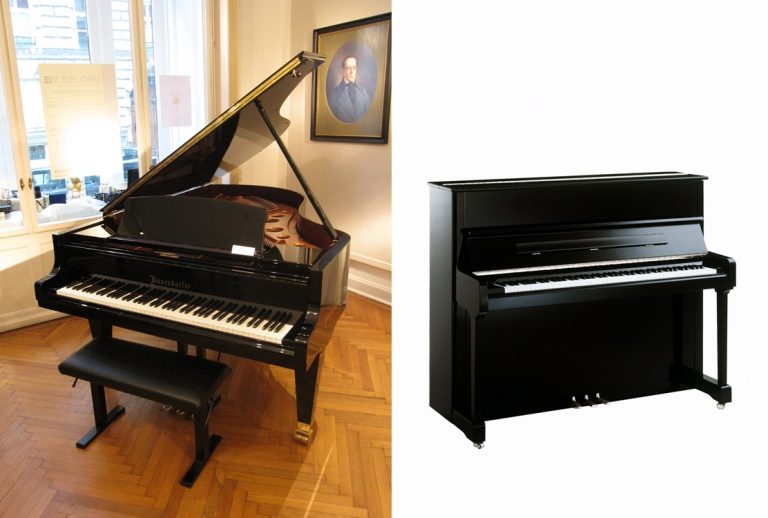
Francesco Tristano Schlimé, born in Luxembourg in 1981 to an Italian mother and raised between Riga, Luxembourg, and Naples, is a trained classical pianist who studied at the Juilliard School in New York and maintains a dual career as a concert pianist and electronic producer. His 2024 Deutsche Grammophon album “On Early Music” performed Girolamo Frescobaldi and Giovanni Picchi keyboard works alongside his own techno-adjacent compositions built around the same source material; it was the best-received classical crossover release of that year across both the electronic and contemporary-classical press. Tristano’s live setup combines a Steinway concert grand, a Rhodes electric piano, and a Eurorack modular system, played simultaneously in real time — a physical feat that has only become possible for him after roughly a decade of daily practice. His relevance to Italian electronic music is indirect but real: he is the producer most frequently cited by younger Italian artists (Barbieri, Senni, Tozzi) as the model for combining conservatory-grade technique with modular fluency, and his residency at Naples’ Teatro San Carlo in 2025 became the most attended electronic-adjacent event in that city’s history. For listeners new to his catalogue, the 2022 album “Tokyo Stories” on InFiné Records is the accessible entry point; “On Early Music” rewards closer attention.
Daniele Baldelli — the Cosmic Disco architect, still working
Daniele Baldelli, born in Cattolica in 1952, is the DJ who invented what is now called Cosmic Disco and Afro-Cosmic sound between 1977 and 1984 at the Baia degli Angeli and Cosmic clubs on the Adriatic coast. His approach — slowing disco records to 90 to 100 BPM, layering them with proto-electronic records from Germany and the Caribbean, and mixing dub, post-punk, and African funk into continuous 45-minute passages — predates both house and techno as discrete genres, and it has been claimed as ancestral by Detroit and Chicago producers since the scenes overlapped in the early 1990s. Baldelli never stopped DJing. At 73 he plays roughly 35 dates a year globally, with the 2025 calendar including bookings at Panorama Bar Berlin, Nowadays New York, De School Amsterdam before its closure, and Goa Club Rome. His 2024 compilation “Cosmic Italo Journey” on Spazio Disponibile collected the original tapes from the Cosmic club’s 1979 to 1982 era, digitised from his personal archive, and became a critical touchstone for the revival of Italo-disco taste among younger producers. The practical reason Baldelli matters in 2026 is that the current Italian hypnotic-techno sound — Dozzy, Neel, Tozzi — inherits his emphasis on slow tempos, textural layering, and patient dancefloor pacing rather than from the Detroit or Berlin lineages the press more often invokes. Start with his 1983 “Cosmic 3” tape reissue and work forward; the through line to contemporary Italian techno is visible in one listening session.
Nu Guinea (now Nu Genea) — the Naples duo who remade Italian funk
Massimo Di Lena and Lucio Aquilina began working together in Berlin in 2014 as Nu Guinea and renamed the project Nu Genea in 2021 after a trademark dispute. Their 2018 debut album “Nuova Napoli” reassembled Naples funk, boogie, disco, and dialect soul into something that sounded simultaneously like a lost 1981 session and a brand-new record — a move the New York Times and The Guardian both picked up on in 2019 coverage. The 2022 follow-up “Bar Mediterraneo” widened the frame across the Mediterranean basin with Tunisian, Greek, and Turkish voicings and charted in Italy and France. What distinguishes Nu Genea within the Italian electronic scene is that their work is functionally a recording-studio project rather than a club-DJ one: they record live instrumentation with Naples session musicians in analogue studios, not Eurorack modular in a bedroom, and their live shows are eight to eleven-piece band configurations with singers, percussionists, and horn players rather than DJ sets. Their 2024 tour sold out 38 consecutive dates across Europe, including a three-night residency at Rome’s Monk Club that pulled approximately 4,500 attendees total, the highest figure for any Italian electronic-adjacent project in that venue’s history. For readers, the starting point is “Je Vulesse” from “Nuova Napoli” (a seven-minute dialect ballad that made the group internationally known), followed by the full “Bar Mediterraneo” album listened to sequentially.
The Italian labels building the infrastructure
An electronic music scene without labels is a collection of SoundCloud accounts. The label ecosystem below is what converts Italy’s producer talent into a scene with international commercial reach. Five labels are structurally essential to the 2026 Italian electronic landscape.
NG Records is Nu Genea’s own imprint, founded in 2018 when Comet Records declined to release the first Nu Guinea album and the duo pressed 500 copies themselves. The label is deliberately small — eight to ten releases a year, predominantly Nu Genea’s own productions and their side projects — and has become the reference Italian imprint for new Mediterranean funk, boogie, and disco-adjacent work. Distribution runs through Rush Hour in Amsterdam; the limited vinyl pressings sell out within days of release. Notable recent releases include Marcello Giombini’s reissued 1979 “Computer Disco” (licensed by NG from the original Milan tapes) and Francesco Cavaliere’s “Plastic Oasis” EP.
Archive 88 (often styled as Archivio 88) is a Bologna-based label founded in 2018 that specialises in Italo-disco, new-beat, and obscure library-music reissues from the 1978 to 1989 period. The label has established itself as the definitive archivist of Italian dance music from the pre-techno era, with roughly 40 releases to date and a catalogue that ranges from forgotten Adriatic coast DJ tapes to first-time vinyl reissues of library music originally cut to acetate for television production. The label’s founder, whose actual name circulates rarely (he prefers to be known by the A88 alias), runs the operation from a small office behind the Bologna University district. Its releases ship in editions of 300 to 800 copies and are the single most reliable source of mint-condition Italo-disco reissues available anywhere in 2026.
Endless Vacation is Daniele Baldelli and DJ Rocca’s joint imprint, founded in 2015 and active across 32 releases to date. The label’s remit is “cosmic, mutant, and unclassifiable dance music,” and the catalogue lives up to that description: releases include slowed dub disco, Italian post-punk reissues, new productions from Baldelli’s younger collaborators, and occasional sound-design pieces that sit closer to musique concrète than to any dance idiom. Endless Vacation functions partly as a label and partly as a curatorial exercise in which Baldelli demonstrates, one release at a time, what he thinks the lineage descended from Cosmic and Baia degli Angeli should sound like in the present.
Spazio Disponibile is Donato Dozzy and Neel’s hypnotic-techno label, already mentioned above but worth treating here as the structural cornerstone it is. Founded in 2014, now at release number 62 in its catalogue, the label has published work from Outer Space (John Elliott), Abdulla Rashim, Voices From The Lake (Dozzy’s project with Neel), and a rotating cast of European and North American artists who share the slow, textural, modular-derived aesthetic. Its 2024 tenth-anniversary compilation placed on year-end lists at Resident Advisor, Fact, Mixmag, and the Wire. Distribution runs through Hardwax Berlin, which is the telling detail: this is an Italian label that operates through the European techno infrastructure Berlin built, rather than through Italian distribution that does not really exist for this kind of work.
Haunter Records in Milan, founded in 2010 by Giacomo Mazzucato, is the most significant Italian imprint for experimental, industrial, and deconstructed-club music. Its roster includes Caterina Barbieri affiliates, Nunzio Borino, Fra Bernardo, and a widening group of younger producers working between noise, drone, and club idioms. The label’s 2024 releases placed on the experimental-music year-end lists at Quietus, Boomkat, and Bandcamp Daily. Haunter matters because it is genuinely run from Italy, not from Berlin or London — a rarity for labels of this critical profile — and it has become the structural anchor for the Italian experimental scene that Barbieri and her contemporaries inhabit.
Where the scene actually lives, in 2026
The Italian electronic infrastructure runs through three axes: the festival circuit, a handful of clubs, and the label ecosystem.
Polifonic, held at Masseria Torre Maizza in Puglia in late July, has become the country’s most respected festival for serious electronic programming. The 2026 edition, confirmed for 29 July to 2 August, is built around the 150-year-old masseria and its surrounding olive groves, with programming that ranges from Dozzy and Sangiuliano headline sets to experimental performances from the likes of Laurel Halo and Kali Malone. The festival’s curatorial bar is the highest in Italy, and its capacity is deliberately small — around five thousand — which gives it a specialist feel that the larger events cannot replicate.
C2C in Turin, historically the most important electronic festival in Italy, maintains its November slot with a programme that mixes mainstream crossover names with genuinely experimental booking. Nameless, held on the shores of Lake Como in June, is the commercial end of the spectrum but continues to book Italian names alongside its international headliners.
The club scene is narrower than the festival circuit suggests. Club to Club’s Turin residency, Fabrique in Milan, and Goa Club in Rome carry the main weekly programming. Several smaller rooms — Elita in Milan’s former industrial zone, Classic Club Rimini on weekends only — host the more adventurous bookings that international tourists rarely discover.
The labels are where the longer-term development happens. Spazio Disponibile is already covered. Haunter Records, based in Milan, has become the default home for Italian experimental and industrial electronic work — their 2024 releases from Fra Bernardo, Nunzio Borino, and Caterina Barbieri associates placed on several international year-end lists. Presto!? Records and 42 Records, operating out of Rome and Milan respectively, cover a broader territory that extends into electronic pop and production-forward alternative rock.
What changed, technically
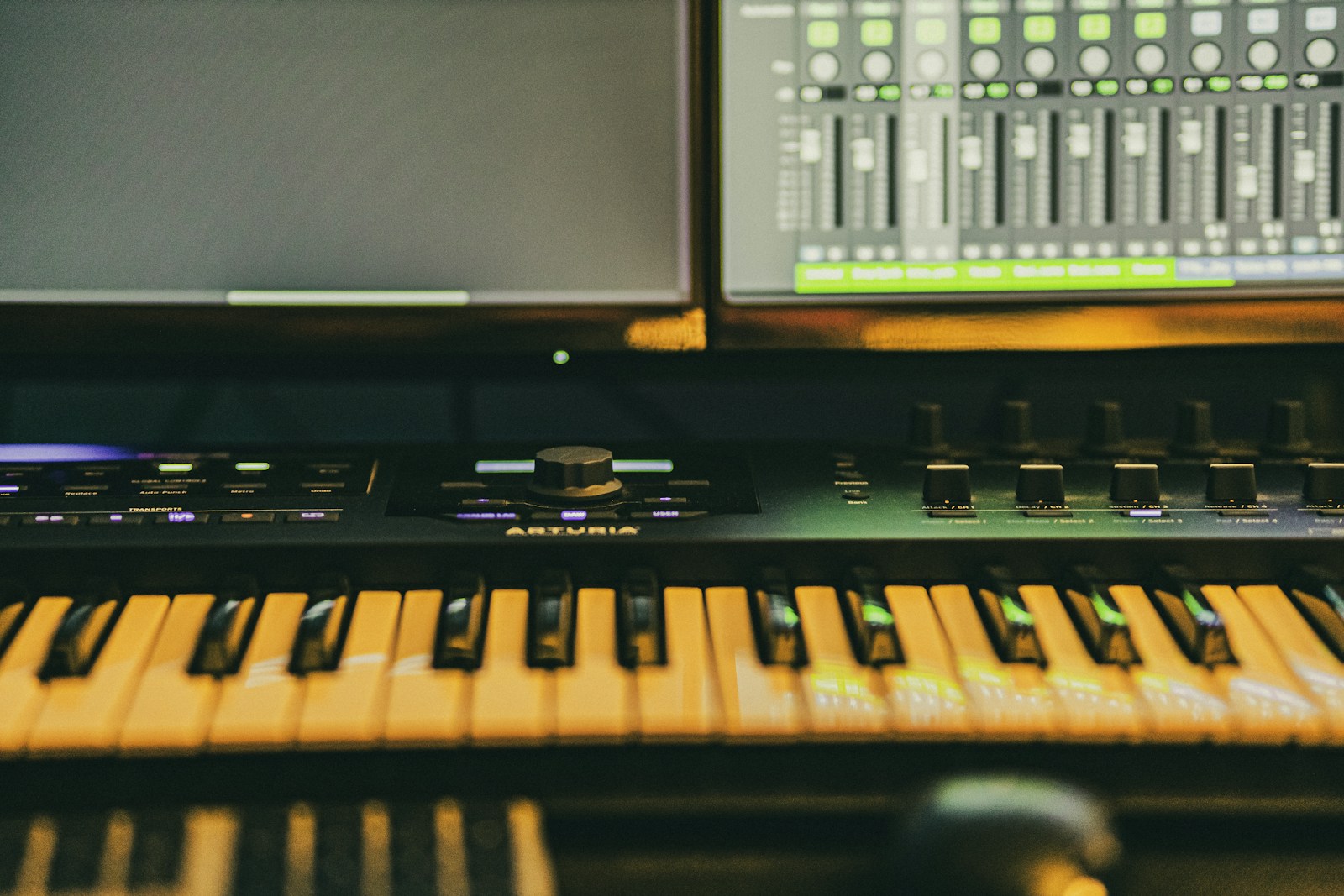
One substantive reason for the current strength of Italian electronic music, beyond cultural fashion, is the shift toward modular synthesis as the central compositional tool. The Italian modular hardware industry — Soundmachines, Instruo, Erica Synths’ Italian distributors, and the domestic makers FH Sintesi and Jomox — has built real infrastructure for a generation of producers who work with patch cables rather than software. The studios I visited in Milan and Bologna for this piece were dominated by Eurorack racks, with laptops often shoved to one side of the desk.
The aesthetic consequence is that Italian techno in 2026 often sounds distinctly hand-made. It has the acoustic grit, the slight imprecision, the long slow textural evolution that patch-cable synthesis produces. This is the opposite of the sample-pack-and-DAW workflow that dominates commercial production elsewhere, and it is what the international festival bookers are specifically looking for.
Reader questions, addressed directly
Who are the most influential Italian techno producers right now? Dozzy, Capriati, Sangiuliano, Tozzi, and Senni are the five names that consistently appear in international programming conversations. Barbieri belongs in this list but sits outside conventional techno.
Where can I hear Italian electronic music live in 2026? Polifonic in late July, C2C in November, and Nameless in June are the three programmed festivals. For club settings, Berlin’s Berghain, Amsterdam’s Dekmantel, and London’s fabric still book Italian artists more reliably than most Italian clubs do.
Is there a single “Italian sound” in 2026? No, and this is a strength. The hypnotic-techno school of Dozzy, Tozzi, and Neel is one identifiable lineage. Capriati and Sangiuliano represent a commercial peak-time tradition. Barbieri, Senni, and Primitive Motion occupy an experimental space that connects more closely to contemporary classical than to dance music. What unifies these is high production standards and the modular-synthesis tool chain, not a shared sonic signature.
What should I listen to first? Start with Dozzy’s Mindimension, Capriati’s Self Portrait, Barbieri’s Ecstatic Computation, Senni’s Persona, and the Spazio Disponibile 10th Anniversary compilation. Five records will give you a map of the scene’s range.
The structural problem
Italian electronic music has a structural problem worth naming directly: it exports its talent. Dozzy, Barbieri, Senni, and most of the internationally recognised producers are based partly or fully in Berlin, London, or Amsterdam. The Italian club economy cannot sustain full-time careers for artists of that stature, and the industrial ecosystem — booking agencies, label infrastructure, PR — remains concentrated in the northern European cities that have subsidised electronic music for decades.
The result is that an international observer sees Italian artists everywhere on the global touring circuit but relatively few at home on a given week. This is not unique to Italy; the same is true of Portuguese, Spanish, and Polish electronic scenes. But it does mean that the best Italian electronic music is often easier to hear in Berlin than in Rome, which continues to frustrate the Italian journalists who cover the scene.
There are signs of change. The Polifonic-adjacent ecosystem in Puglia is building local infrastructure. Milan’s Haunter Records is a genuinely Italian-run operation that routes its releases through Italian PR. And the Naples scene around Capriati has produced enough second-generation artists that it is now, functionally, self-sustaining. Whether this grows into the kind of domestic industry that can retain talent long-term is the question most Italian scene participants are asking privately.
A practical listener’s plan
If you are new to Italian electronic music, the best first step is one weekend at Polifonic — the festival functions as a curated introduction to the current state of the scene in a way that no playlist can replicate. Second choice: a club night at Berghain or fabric where the Italian booking is doubled-up, which happens three or four times per year. Third choice, and the most realistic for most readers: a methodical listen through the five records named above, with ten more from each artist’s catalogue as your curiosity pulls you.
For readers interested in the production side of this scene, our home studio guide covers the entry-level setup that precedes any modular work, and the mixing audio guide addresses the post-tracking craft that is as important in electronic music as in any other genre.
If you take one record home from this piece, make it Donato Dozzy’s Mindimension. Put it on at 11pm, in the dark, on headphones, and give it an hour. The Italian scene, in all its current strangeness, makes considerably more sense after that single listen.
Further Reading
- Pitchfork review of Caterina Barbieri’s Myuthafoo
- Resident Advisor profile of Joseph Capriati
- Telekom Electronic Beats on Italy’s experimental scene
Sull'Autore