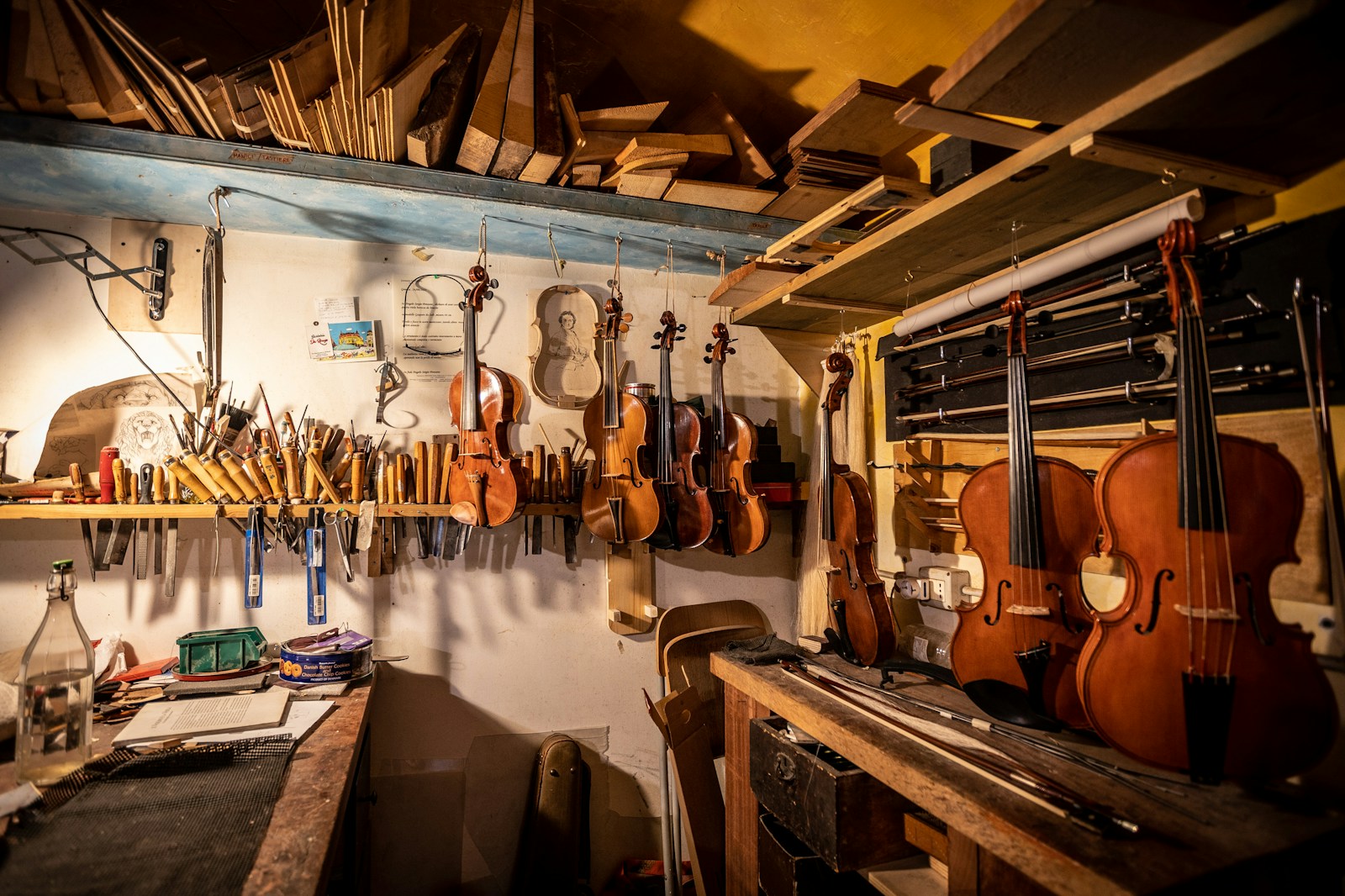
The luthier I worked with on my first violin restoration, in his small workshop near the Cremona conservatory, kept a hand-written ledger of his commission queue. In 2018, the wait was eighteen months. By 2024, it was thirty-four. By the time you read this, it is almost certainly longer. The same tightening has happened across most categories of acoustic-instrument restoration: violin, viola, cello, classical guitar, piano, woodwind, brass. Restorers of high quality are concentrated, often elderly, and producing fewer apprentices than retire each year. The economics of restoration in 2026 are shaped by that imbalance.
This piece looks at how restoration markets actually work for the most common instrument families, what justifies the substantial cost of serious restoration, and how a working musician should think about the decision to restore rather than replace. The aim is practical, not nostalgic: instruments are working tools, and restoration is an investment that should be made with eyes open.
Why restoration markets are tightening
The structural shortage of senior restorers has several causes. Most obviously, the apprenticeship pathway is long and economically punishing. A serious violin restorer typically completes formal training (Cremona, Mittenwald, Newark in the UK, the Salt Lake City workshop tradition) followed by five to ten years of apprenticeship before establishing an independent practice. Most apprentices earn modestly during this period, and the financial gap is widening as urban housing costs rise.
The second factor is generational. Many working masters in the violin world were trained in the 1960s and 1970s, by Italian, French and German masters who themselves had trained before the war. As that cohort retires, the equivalent talent depth among younger restorers is real but smaller. The piano world has a similar pattern: many of the senior rebuilders working on Steinway, Bösendorfer and Bechstein instruments were trained in factory apprenticeship programmes that no longer operate in the same form.
The third factor is demand growth. The market for high-quality acoustic instruments expanded substantially in the 2000s and 2010s, driven partly by Asian conservatory expansion and partly by the durable cultural prestige of instruments as investment objects. More instruments need restoration than the available restorer pool can serve.
Violin family restoration
Restoration of bowed string instruments runs from minor adjustments (bridge, soundpost, peg fitting) up through major structural work (re-graduation, neck reset, top removal and bass-bar replacement) to full reconstruction of damaged historical instruments. Costs vary by complexity and by the instrument’s value.
For a routine bridge, soundpost and setup work on a working instrument, expect to pay between 150 and 500 euros depending on regional pricing. Bow rehairing runs 50 to 100 euros for a standard rehair, longer if the bow itself needs work. A full reset of the neck — typically necessary every fifty to one hundred years on a serious instrument — runs from 800 to 3,000 euros depending on access requirements and historical sensitivity.
Major restoration of an antique instrument can run substantially higher. Top removal and structural work on a Stradivari or Guarneri instrument typically takes a year or more and is performed only by the most senior restorers. Costs at this tier are often quoted in five and six figures, although such work is rare and usually undertaken under museum or insurance commission rather than private order.
The economics suggest that restoration is justified for instruments above a certain quality threshold. A working European-tradition violin worth more than approximately 5,000 euros generally repays a careful restoration investment with improved playability and preserved value. Below that threshold, replacement may be more economically rational.
Piano restoration
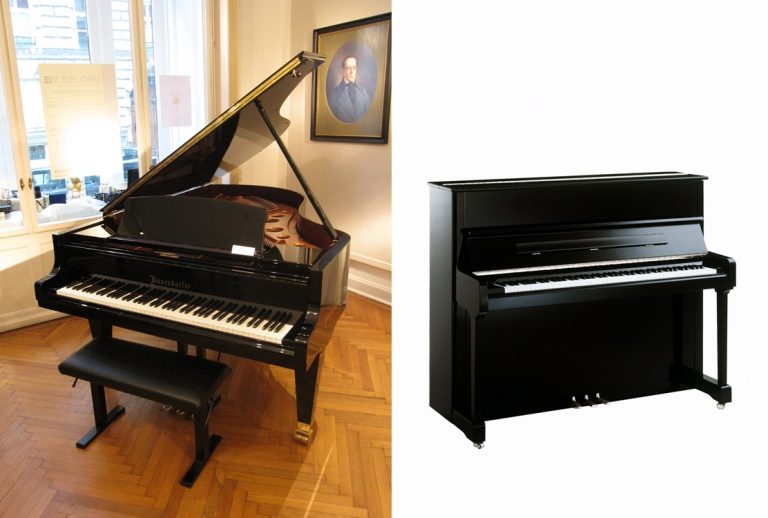
Piano restoration economics are particularly complex because the instrument has many distinct subsystems that age at different rates. The action (the hammer mechanism) typically requires substantial work every fifty to seventy years. The strings need replacement at roughly the same interval. The soundboard and bridges may last a century or more under good conditions but can crack catastrophically under temperature and humidity stress.
A full restoration of a vintage Steinway grand — replacing strings, hammers, dampers, action regulation, and refinishing the case — typically costs between 25,000 and 60,000 dollars in 2026, with the wider range reflecting whether the soundboard is repaired or replaced. A new comparable Steinway grand costs between 80,000 and 200,000 dollars depending on model. The economic case for restoration is therefore strong if the original instrument has historical or sentimental value, since restored Steinways frequently match new instruments for tone while preserving the older instrument’s specific character.
Restoration of less prestigious pianos often does not pencil out economically. A 1960s upright piano of Eastern European manufacture, restored to playable condition, typically costs more than the restored instrument is worth on the second-hand market. Several reputable rebuilders in Europe and North America publicly counsel against restoration of mid-tier instruments, recommending replacement instead.
Wind instrument restoration
Saxophone, clarinet, oboe and brass restoration has become substantially more difficult to source at high quality in the past decade. The vintage saxophone market in particular — Selmer Mark VI, Conn 6M, King Super 20 — depends on a small number of repair specialists worldwide, with primary concentrations in Tokyo, New York, Paris and a handful of regional centres.
A full overhaul of a vintage Selmer Mark VI saxophone, including pads, springs, key fitting, regulation and lacquer assessment, typically runs 1,500 to 3,500 dollars in 2026, with the higher end common for the most senior repair specialists. Wait times of one to two years are typical for high-end shops. The instruments themselves trade on the second-hand market for 5,000 to 25,000 dollars depending on year, condition and original lacquer.
Brass instrument restoration is similarly specialised. Vintage Vincent Bach trumpets and trombones, mid-twentieth-century Conn cornets, and the classic Olds and Schilke instruments all have established communities of specialist restorers, but the population is small and aging.

The ethics of restoration
Restoration of historical instruments raises ethical questions that are debated within the conservation community. The most contested area is the line between restoration and modification. A violin built in 1720 likely had a shorter neck, a less angled fingerboard, and gut rather than steel strings. Restoring it to 1720 specifications would make it largely unplayable in modern repertoire. Modifying it for modern performance — as nearly all surviving Cremonese violins have been — necessarily alters the historical artifact.
The current consensus, articulated through bodies including the American Federation of Violin and Bow Makers and the British Violin Making Association, holds that restoration should be reversible where possible, documented thoroughly, and undertaken with the instrument’s likely future use in mind. Original parts are retained and stored when replaced, so future restorers have full information about the instrument’s history.
The piano world has different conventions. Soundboard replacement, which alters the instrument’s tonal identity, is a contested practice. Some restorers consider it acceptable when the original is unrepairable. Others, particularly in the European tradition, consider replacement a last resort and undertake heroic measures to preserve original soundboards.
How to choose a restorer
For musicians without prior restoration experience, choosing a restorer is the most consequential decision in the process. Several practical filters help:
- Ask for references from working musicians, not just collectors. A restorer favoured by orchestral players is a stronger signal than one favoured by investors.
- Check whether they document work photographically. Serious restorers keep before-and-after photo records.
- Ask about retained parts. Original components should be returned to the owner or stored.
- Visit the workshop. A clean, well-organised workshop is itself a quality signal.
- Get a written estimate. Open-ended verbal arrangements are common and frequently produce disputes.
The investment dimension
Quality instruments in good condition have appreciated substantially over the past forty years. The Strad Magazine’s annual auction tracking shows that fine Italian violins of the seventeenth and eighteenth centuries have appreciated at compound rates of approximately 5 to 8 percent annually since the 1980s, exceeding most equity indices over the same period. The 2024 Sotheby’s sale of the “da Vinci” Stradivari for over 15 million dollars, reportedly to a private buyer, indicates the upper bound of the market.
The investment dimension is real but should not dominate practical decisions for working musicians. A violin that is bought for investment and not played tends to deteriorate, since acoustic instruments require regular use to maintain their tonal character. The strongest performance assets are usually owned by musicians who play them daily.
Final practical advice
The single most important habit for any musician serious about their instrument is regular professional inspection. An annual checkup with a competent technician — bridge alignment for bowed strings, regulation for piano, pad inspection for woodwind — typically costs under 200 euros and prevents problems that would later require expensive restoration. The musicians who maintain instruments well into their second century are usually the ones who treated minor issues before they became major.
Regional variations: where the restoration centres are
Restoration markets are geographically concentrated in ways that affect both pricing and wait times. For violin family work, the historical centres remain Cremona in northern Italy, Mittenwald in Bavaria, Mirecourt in eastern France, and the post-war American centres in Salt Lake City, Chicago and New York. The Cremona school maintains the strongest international reputation but charges premium rates and operates the longest wait times. The American centres, particularly William Harris Lee & Co. in Chicago and the Reed Yeboah Fine Violins workshop in New York, offer comparable quality at slightly lower wait times.
For piano work, the geography divides between factory restoration (Steinway in Hamburg and Long Island City, Bösendorfer in Vienna, Bechstein in Berlin) and independent specialist workshops. Independent specialists often charge less than factory programmes but vary substantially in quality. The most respected independent rebuilders — including Frank Mazurco’s workshop in New York, the Daniel Magne workshop in Paris, and the Trevor Pinch workshop in Cheshire — have wait times comparable to the factory programmes but produce results that many critics consider superior because the work is concentrated under a single master rather than distributed across a factory team.
For woodwind and brass work, the geography is even more concentrated. Tokyo hosts several of the world’s most respected saxophone repair specialists, including the Yanagisawa technical division and a small number of independent workshops trained in the Selmer Paris tradition. New York’s Saxquest in St. Louis is the dominant American specialist for vintage Selmers and Conns. London’s Howarth of London is the European reference for oboe restoration. For brass, the Yamaha Atelier programme operates regional centres but defers to a small number of master repairers in New York, Tokyo and Frankfurt for the most demanding work.
A case study: rebuilding a 1962 Selmer Mark VI
To make the cost and timeline implications concrete, consider a representative restoration of a 1962 Selmer Mark VI tenor saxophone, an instrument widely considered among the best saxophones ever produced and currently trading on the second-hand market for 8,000 to 18,000 dollars depending on condition. A friend brought a 1962 instrument to a respected New York repair specialist in early 2024. The pre-work inspection identified original lacquer at approximately 65 percent, leaks across the lower stack, several bent keys from a previous owner’s accident, and a worn neck cork that needed replacement.
The repair specialist quoted a full overhaul at 2,800 dollars, broken down as: pads and resonators (650 dollars), springs and key oil (140 dollars), key fitting and regulation labour (1,650 dollars), neck cork and tenon adjustment (180 dollars), case humidity control (60 dollars), and final play-testing (120 dollars). The wait was 14 months from quote to scheduled work; actual work took six weeks. The post-restoration value of the instrument, based on subsequent insurance appraisal, was approximately 11,500 dollars — a clear net positive return on the restoration investment, particularly given the improved playability.
Misconceptions about instrument restoration
Several common misconceptions about restoration deserve correction. The first is that all restoration adds value. It does not. Poor or aggressive restoration can substantially reduce an instrument’s value, particularly for historical instruments where original components and finish are part of the instrument’s identity. A Stradivari violin with replaced f-holes, even if the replacement is technically excellent, is worth substantially less than one with original f-holes intact.
The second is that restoration should always preserve original sound. The original sound of a 1720 violin includes the gut strings, lower string tension, and shorter neck of the period. Modern restoration almost always modifies these features for current performance use. The choice between preservation and modification is genuinely contested among conservators, and the right answer depends on the instrument’s intended future use.
The third is that restoration is a one-time event. Quality acoustic instruments require periodic professional attention throughout their working life. A violin in regular use needs bridge adjustment every two to five years, soundpost reset roughly every decade, and major work every fifty to one hundred years. A piano in moderate use needs full regulation every twenty to thirty years and substantial action work every fifty. Treating restoration as a single event rather than a maintenance cycle leads to instrument failure between events.
The fourth is that vintage instruments are inherently superior to new ones. The historical record shows that fine new violins by living makers — Joseph Curtin, David Burgess, Christophe Landon, Roger Hargrave — frequently match or exceed historical instruments in blind acoustic testing. The 2012 study by Claudia Fritz and colleagues, published in Proceedings of the National Academy of Sciences, found that professional violinists could not reliably distinguish new high-end violins from Stradivari and Guarneri instruments under blind playing conditions. The vintage premium is partly acoustic and partly market-driven.
Decision framework: restore or replace?
For working musicians facing a restoration-or-replacement decision, the criteria below cover most cases.
- Calculate the restoration cost as a percentage of replacement cost. If restoration is 50 percent or less of equivalent replacement value, restoration is usually rational.
- Assess sentimental and historical value. An instrument with personal or historical significance often justifies restoration even when the economics are marginal.
- Check the instrument’s structural soundness. Some damage (cracked soundboards, cast-iron piano frame fractures, severe woodworm in violins) makes restoration economically irrational regardless of the instrument’s other qualities.
- Consider the wait time. A two-year wait for restoration may not match a working musician’s professional schedule. Replacement may be the practical choice even when restoration would otherwise be economically rational.
- Verify the restorer’s track record on similar instruments. Different restorers specialise in different periods and traditions, and matching the instrument to the right specialist matters more than picking the most famous name.
Further reading
The Wikipedia entry on luthiery provides historical context for stringed instrument restoration. The Steinway and Sons restoration division publishes considerable detail on its rebuilding processes. The Metropolitan Museum of Art Department of Musical Instruments holds extensive scholarly material on historical restoration ethics and practical techniques. Our archive on instrumental life is at imparare la musica, with broader career-craft material at carriera musicale, and a separate thread on historical instruments covering the technical and ethical questions in more depth.
This article is for informational purposes; instrument values, restoration costs and wait times vary significantly by region and individual restorer, so verify current pricing directly with your chosen specialist.
Sull'Autore