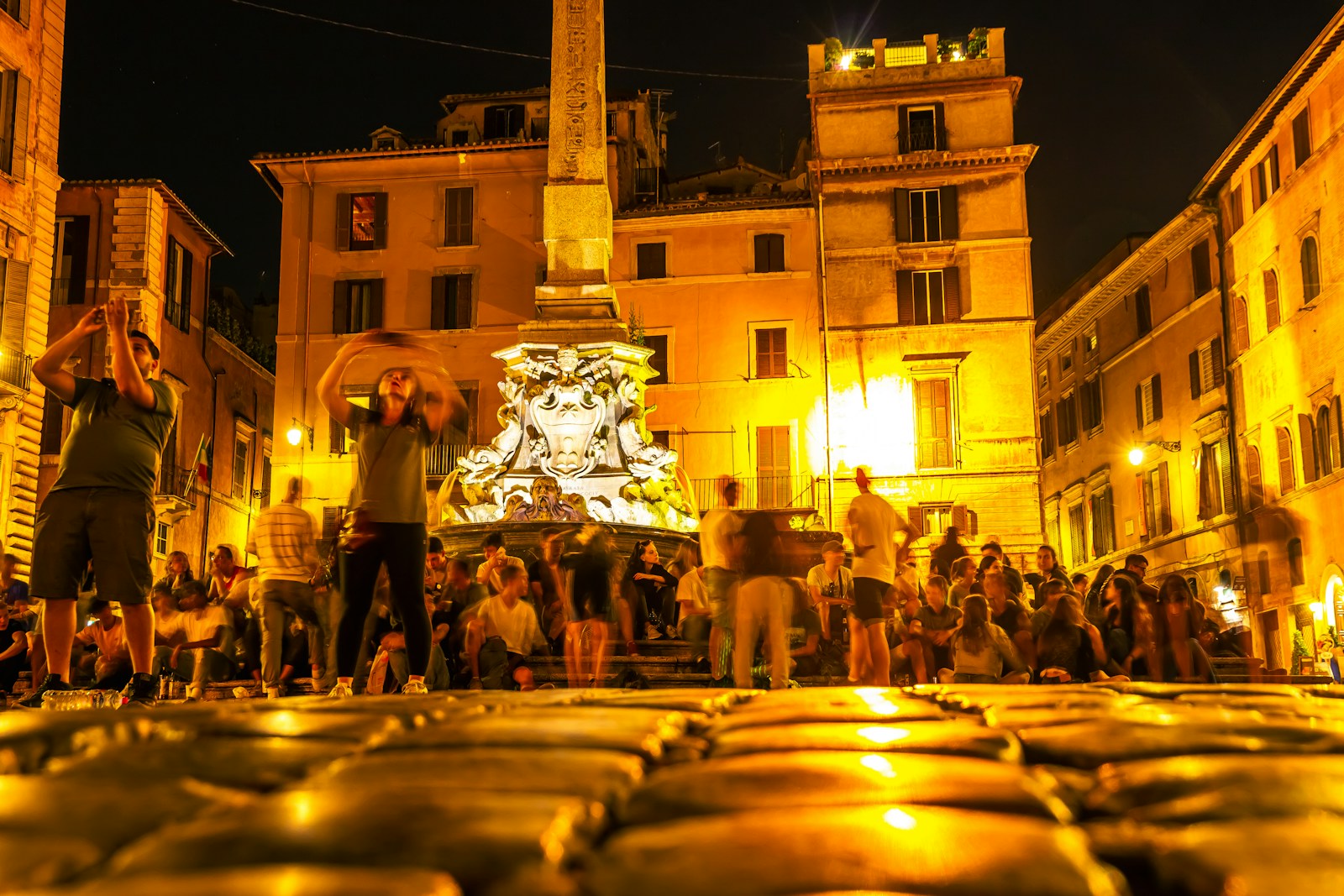
On the second night of the Notte della Taranta festival in Melpignano, in the Salento, the central piazza fills with roughly a hundred thousand people. The crowd is densely Italian and increasingly international, drawn by a music — the pizzica — that thirty years ago was nearly extinct, performed mostly by elderly farmers and rural musicians and largely ignored by the Italian musical establishment. The pizzica’s revival, beginning in earnest in the early 1990s, is now one of the most successful regional music recoveries anywhere in Europe. It is also only one of several similar revivals happening simultaneously across the Italian peninsula and islands.
This piece looks at the regional Italian music revivals that have shaped the country’s musical landscape over the past three decades — pizzica salentina, Sardinian canti a tenore, Genoese trallalero, Sicilian carrettieri tradition, and Alpine yodelling and polyphony — and what they reveal about how endangered musical traditions can recover when conditions are right.
The pizzica salentina
The pizzica is a fast 6/8 dance music from the Salento peninsula in southern Apulia, historically associated with the tarantismo healing ritual in which women bitten by spiders (or believed to be bitten) were treated through ecstatic music and dance. The ritual was extensively documented by ethnomusicologist Ernesto De Martino in his 1961 book La terra del rimorso and largely declined as a healing practice through the second half of the twentieth century.
The music itself, however, recovered through a deliberate effort beginning in the late 1970s and accelerating after the foundation of the Notte della Taranta festival in 1998. The festival was created by a coalition of municipal governments in the Grecìa Salentina, with strong involvement from the ethnomusicologist and producer Daniele Durante. By 2024 it had become the largest folk-music festival in southern Europe, with a 2-week programme drawing more than 250,000 attendees over the course of the festival.
The pizzica revival has produced a substantial new generation of musicians. Groups including Canzoniere Grecanico Salentino, founded in 1975 and now in its second generation under the leadership of Mauro Durante, have built international touring careers. The 2018 album Canzoniere by Canzoniere Grecanico Salentino received a Songlines Music Award. Other significant pizzica artists include Antonio Castrignanò, Aramirè, and the group Officina Zoé.
Canti a tenore: the Sardinian polyphonic tradition
The Sardinian canto a tenore, recognised by UNESCO as Intangible Cultural Heritage in 2005, is a male polyphonic vocal tradition associated primarily with the central Barbagia region. Four singers — bassu, contra, mesu boche and boche — produce a rough, grainy harmonisation that has no direct parallel elsewhere in Western European vocal traditions. The bassu and contra parts use a guttural production that resembles overtone singing more than standard Western singing technique.
The tradition was significantly endangered by the early 1990s, with most active singing groups containing members over sixty. The UNESCO recognition, combined with sustained promotion by Sardinian regional cultural authorities and the Cagliari-based Tenores di Bitti recording project, produced a measurable revival. By 2024, more than fifty active tenore groups were performing regularly across Sardinia, and several had developed international touring profiles.
The most internationally recognised group is probably Tenores di Bitti, whose 1996 collaboration with Peter Gabriel’s Real World label brought the tradition to non-Sardinian audiences. The group has continued to record and tour, with a 2022 album marking thirty years of the original lineup.
The Genoese trallalero
The trallalero is a Ligurian male polyphonic tradition, sung in groups of seven to nine voices, with origins in the dock workers and fishermen of the Genoa region. The form’s distinctive feature is a high tenor voice (the contralto, sometimes sung in falsetto) layered against a multipart harmony that includes a guitar imitator (chitarra) — a singer producing a percussive guitar-like sound with the voice alone.
The trallalero declined sharply in the second half of the twentieth century, partly because the dock-working and fishing communities that sustained it shrank, and partly because younger Genoese tended toward Italian and international popular music. The revival has been less spectacular than the pizzica or canto a tenore but has succeeded in maintaining about a dozen active singing squadre (squads) across the Genoese region.
The most significant recent development was the 2018 founding of the Premio Trallalero, a prize and festival operating in cooperation with the regional government, which has substantially raised the profile of younger ensembles. Groups including La Squadra di Canto Popolare have toured internationally and recorded multiple albums.
The Sicilian carrettieri tradition
The Sicilian carrettieri were the cart drivers who worked the rural transport routes of the island in the nineteenth and early twentieth centuries, and their songs — slow, melismatic, often improvised — were a major folk-music form for several generations. The tradition has been studied extensively by the ethnomusicologist Antonino Buttitta and others, with substantial recordings made by RAI in the 1960s and 1970s.
The carrettieri tradition was almost completely extinct as a living practice by the 1990s. Its revival has been more modest than other Italian regional revivals, but the work of artists including Mario Crispi and Etta Scollo has reintroduced the repertoire to younger Sicilian and international audiences. The 2014 album Vicaria by Etta Scollo was particularly important in repositioning the tradition for contemporary performance.

Alpine traditions: yodel, jodelan and polyphony
The Italian Alps preserve a number of polyphonic and yodelling traditions, most notably in the Trentino-Alto Adige region, where German-speaking and Italian-speaking communities have long maintained parallel traditions. The most studied of these is the polyphony of the Val di Fiemme region, documented extensively by the ethnomusicologist Renato Morelli, whose multi-volume recordings published through CNR (Italian National Research Council) remain definitive.
The Alpine traditions have not undergone a “revival” in the same sense as the southern Italian ones, partly because they did not decline as sharply. The Trentino choral tradition, in particular, has remained relatively continuous through the twentieth century, with a substantial network of village choirs that perform regularly. The Alpini choir tradition, associated with the Italian alpine military regiments, has played a significant role in maintaining the repertoire.
What the revivals share
Several features recur across the successful Italian regional music revivals. They typically combine ethnomusicological research, public festival programming, regional government support, and a small group of younger musicians willing to commit careers to the recovery. Where one or more of these elements has been missing, revivals have tended to stall.
The role of festivals has been particularly important. The Notte della Taranta in Salento, the Time in Jazz festival in Berchidda (which has incorporated Sardinian traditional music), and the Pippo Pollina-led folk circuits in Sicily have provided economic infrastructure that sustained working musicians during the rebuilding period.
The role of recording infrastructure also matters. The work of independent labels like Felmay, CNI Music, Anima Mundi and Finisterre has been disproportionate to their commercial scale. Many of the most important regional Italian recordings of the past three decades were produced on budgets that would not have supported a single mainstream pop release.
The newer generation
By 2026, the generation that led the revivals of the 1990s and 2000s is largely in its fifties and sixties, and a younger cohort is taking over. Several musicians in their twenties and thirties have produced significant work in regional traditions while drawing on contemporary musical languages. Mauro Durante’s work with Canzoniere Grecanico Salentino has involved collaborations with international electronic producers. The Sicilian musician Cesare Basile has worked across folk and rock idioms. The Sardinian guitarist Paolo Angeli has integrated traditional Sardinian techniques with contemporary improvisation.
This intergenerational continuity is the most reliable signal of a successful revival. A tradition that exists primarily as performance by older specialists can survive a generation but rarely two. A tradition that has working musicians at multiple ages, with continued recruitment from younger players, has the structural conditions for genuine continuity.
What the revivals teach
The Italian regional revivals offer some useful general observations about endangered music traditions. They can recover, sometimes substantially, when sustained institutional and economic support combines with sustained musical talent. They cannot recover by enthusiasm alone, even quite considerable enthusiasm. The role of professional ethnomusicology is significant; the documentation work of De Martino, Diego Carpitella, Roberto Leydi and their successors provided the empirical record on which later musicians could build.
The regional Italian case probably has applicability beyond Italy. Several similar regional music traditions across Mediterranean Europe — Catalan rumba, Portuguese fado, Greek rebetiko, Andalusian flamenco — have followed broadly similar revival trajectories with broadly similar institutional support structures. The Italian model is not unique, but it is unusually well documented and provides a useful case study.
The festival ecosystem supporting regional revival
Beyond the Notte della Taranta, several other festivals have built substantial economic infrastructure for Italian regional music. The Time in Jazz festival in Berchidda, Sardinia, founded by trumpeter Paolo Fresu in 1988, has integrated Sardinian traditional music alongside its core jazz programming and has substantially supported younger Sardinian musicians working at the boundary between tradition and contemporary jazz. The Ariodante Festival in Verona has performed similar functions for Northern Italian polyphonic traditions. The Folkest festival across Friuli Venezia Giulia has supported the regional music of the Italian-Slovenian-Austrian borderland.
For travellers wanting to attend these festivals, several practical considerations apply. The major festivals run primarily in summer (July through September), with the Notte della Taranta peaking in mid-August. Accommodation in the surrounding regions fills substantially during festival periods, requiring booking several months in advance. The festivals typically include both ticketed concerts and substantial free programming, with the free events often providing access to younger and emerging artists worth attending.
The northern revivals: Friulian villotta and Piedmontese polyphony
While the most internationally visible Italian regional revivals have been southern, several northern traditions have also experienced significant recovery over the past three decades. The Friulian villotta — a strophic poetic-musical form historically associated with rural courtship and seasonal celebration in Friuli-Venezia Giulia — was substantially endangered by the 1980s but has been recovered through the work of the Società Filologica Friulana and a network of village choral societies. The biennial Festival di Resia, held in the Resia valley near the Slovenian border, has provided a public venue for the related Slavic-influenced polyphony of the local Resian community.
The Piedmontese polyphonic tradition, particularly the four-part vocal music of the Langhe and Monferrato hills, has been documented and recovered primarily through the work of the Cantè ‘j Euv movement, which has organised annual rounds of door-to-door spring singing across Piedmontese villages since the 1970s. The tradition combines elements of liturgical chant, occupational song and improvised polyphony in ways that have attracted recent attention from musicologists at the University of Turin.
Both northern traditions demonstrate that revival can succeed at substantially smaller scale than the southern flagship cases. Neither has produced a Notte della Taranta equivalent, but both have built durable practitioner communities and achieved continuous intergenerational transmission, which by the standards proposed earlier in this piece is the more meaningful test.
The role of national broadcaster archives
One of the most underappreciated factors in the Italian regional music revivals has been the recording archive of RAI, the Italian national broadcaster. From the late 1940s through the 1970s, RAI’s ethnomusicological recording programme — coordinated for many years by Diego Carpitella and Roberto Leydi — produced an extraordinary archive of regional music recordings, frequently capturing performances by elderly tradition-bearers whose practice would otherwise have left no documentary trace. The archive contains more than 30,000 hours of recorded material, much of it digitised since the early 2000s and progressively made available through the RAI Teche programme.
The archive’s importance for the revival movement has been substantial. Several of the central figures in the pizzica revival — Mauro Durante, Antonio Castrignanò and others — have spoken about studying RAI archive recordings of older performers as a primary source of repertoire and stylistic reference. The same is true for the Sardinian canto a tenore revival, where many of the patterns documented in the 1950s and 1960s recordings have served as benchmarks for younger groups recovering the tradition.
The RAI archive’s role illustrates a more general principle. Successful music revivals depend on documentary infrastructure that preserves stylistic specificity across the gap when transmission temporarily fails. Without recordings to study, the second-generation revival musicians would have had only printed scores and partial oral transmission, which is rarely sufficient to recover the rhythmic, dynamic and timbral subtleties of a tradition.
Comparative analysis: Italian and Iberian revival models
The Italian revival model can be productively compared with parallel revivals in Spain and Portugal. The Catalan rumba revival, beginning in the late 1980s and centred on Barcelona, followed a similar trajectory: festival infrastructure (the Mostra del Rumba Catalana since 1995), regional government support, and a younger generation of musicians integrating traditional patterns with contemporary musical languages. The Portuguese fado revival, beginning slightly earlier in the 1990s and accelerating after the UNESCO Intangible Cultural Heritage listing in 2011, similarly combined institutional support with intergenerational continuity.
What distinguishes the Italian case is the sheer number of distinct regional traditions that have been recovered in parallel. The pizzica, canto a tenore, trallalero, carrettieri tradition, Friulian villotta, Piedmontese polyphony and Alpine yodelling collectively represent an unusually rich revival movement that has no exact parallel in any other European country. The structural reason is partly historical (Italy’s late and incomplete national unification preserved regional musical specificity that more centralised states tended to erode) and partly institutional (the RAI archive, regional cultural authorities, and the academic ethnomusicological tradition combined to create unusually strong documentary infrastructure).
Misconceptions about regional music revivals
Several common misconceptions about Italian regional music deserve correction. The first is that the music is “ancient.” Most of the revived traditions, in their currently performed forms, are recognisably products of the nineteenth and early twentieth centuries, with deeper historical roots that are harder to verify. The pizzica’s specific harmonic and rhythmic structure, for example, is well-documented from the 1900s but cannot be reliably traced earlier in the form now performed.
The second misconception is that authenticity requires absolute fidelity to historical practice. The most successful revival musicians have generally treated tradition as living practice rather than museum reconstruction, integrating contemporary instruments, recording techniques and performance contexts. The Notte della Taranta concertone (the festival’s main concert) has explicitly featured electronic and rock crossovers since the early 2000s, which some traditionalists have criticised but which most ethnomusicologists view as continuous with how regional music has always evolved through contact with other genres.
The third misconception is that regional Italian music is uniformly understood as Italian by Italians. The political and cultural relationship between regional traditions and national identity remains contested. Several of the strongest revivals have been associated with regional autonomy movements — the Sardinian canto a tenore in particular has been embraced by Sardinian autonomists as evidence of distinct cultural identity, and the Sicilian carrettieri tradition similarly. The relationship between musical revival and political identity is complicated and not reducible to either pure cultural heritage or political instrumentalisation.
Further reading
The Wikipedia entry on Italian music provides regional context. The Notte della Taranta festival publishes substantial historical material. UNESCO’s intangible heritage listing for the canto a tenore is held by UNESCO. The RAI Teche archive provides public access to digitised ethnomusicological recordings dating from the 1940s through the 1980s, including substantial material on each of the traditions described above. Our notes on Italian musical inspiration are filed at ispirazione musicale, with broader live-music coverage at musica dal vivo, and a separate thread on ethnomusicology following academic developments and new recordings.
This article is for informational purposes and reflects publicly available ethnomusicological research and personal experience attending these festivals; readers interested in specific traditions should consult primary recordings and academic sources.
Sull'Autore