Italy stages more than four hundred summer music festivals between Pentecost and early September, which means the country effectively turns itself into a touring circuit for ten weeks a year. The question for a visiting listener is not whether there is something to hear, but how to cut the list down to three or four nights that are actually worth planning a trip around. This is a filtered map of 2026.
Umbria Jazz, Perugia — 3 to 12 July
The Perugia edition is the anchor of the Italian festival calendar and the most internationally programmed event of the summer. The 2026 line-up runs across the Arena Santa Giuliana, Teatro Morlacchi, and the Galleria Nazionale dell’Umbria, with the city itself becoming a rolling street-stage during the day.
This year the programme opens on 3 July with Sting 3.0, Sting’s current trio project with Dominic Miller and Chris Maas. The following night is the one serious listeners are watching: a double bill of Perigeo – The Last Concert, a reunion of the seminal 1970s Italian jazz-fusion group, followed by the extraordinary Beat supergroup of Adrian Belew, Steve Vai, Tony Levin, and Danny Carey. Jon Batiste plays 5 July, Laurie Anderson brings her current multimedia show on 7 July, and the festival closes on 12 July with Elvis Costello and the Imposters, with Charlie Sexton on guitar and Judith Owen opening.
The middle weekend is unusually strong: 10 July is Brazilian Night, headlined by Gilberto Gil with the Gilsons, and 11 July belongs to Zucchero, which in Perugia is a homecoming of sorts. Snarky Puppy, Terence Blanchard, and Charles Lloyd round out a programme that, at its depth, is closer to a small New York jazz festival than a European summer event.
Practical notes. Perugia hotels triple their rates during the festival and sell out by March. Staying in Assisi or Foligno and taking the regional train in is the informal local hack. The Arena Santa Giuliana seats around four thousand; the main headliners sell out, but the jazz programme at Teatro Morlacchi regularly has day-of tickets at more humane prices.
Taormina, Sicily — June through September
Taormina is the one place in Italy where a concert venue is older than most of the repertoire performed in it. The Teatro Antico, a Greek-Roman amphitheatre carved into a hillside facing Mount Etna, programmes two distinct seasons each summer.
The Opera Selection 2026 runs from May through October at Teatro Nazarena, with a rotating repertoire of Tosca, La Traviata, Pagliacci, and La Bohème in intimate staging. Purists sometimes dismiss these performances as tourist-facing; that is unfair. The orchestra is competent, the voices are working-repertoire Italian, and the scale is right for audiences who find Verona’s arena too large to feel.
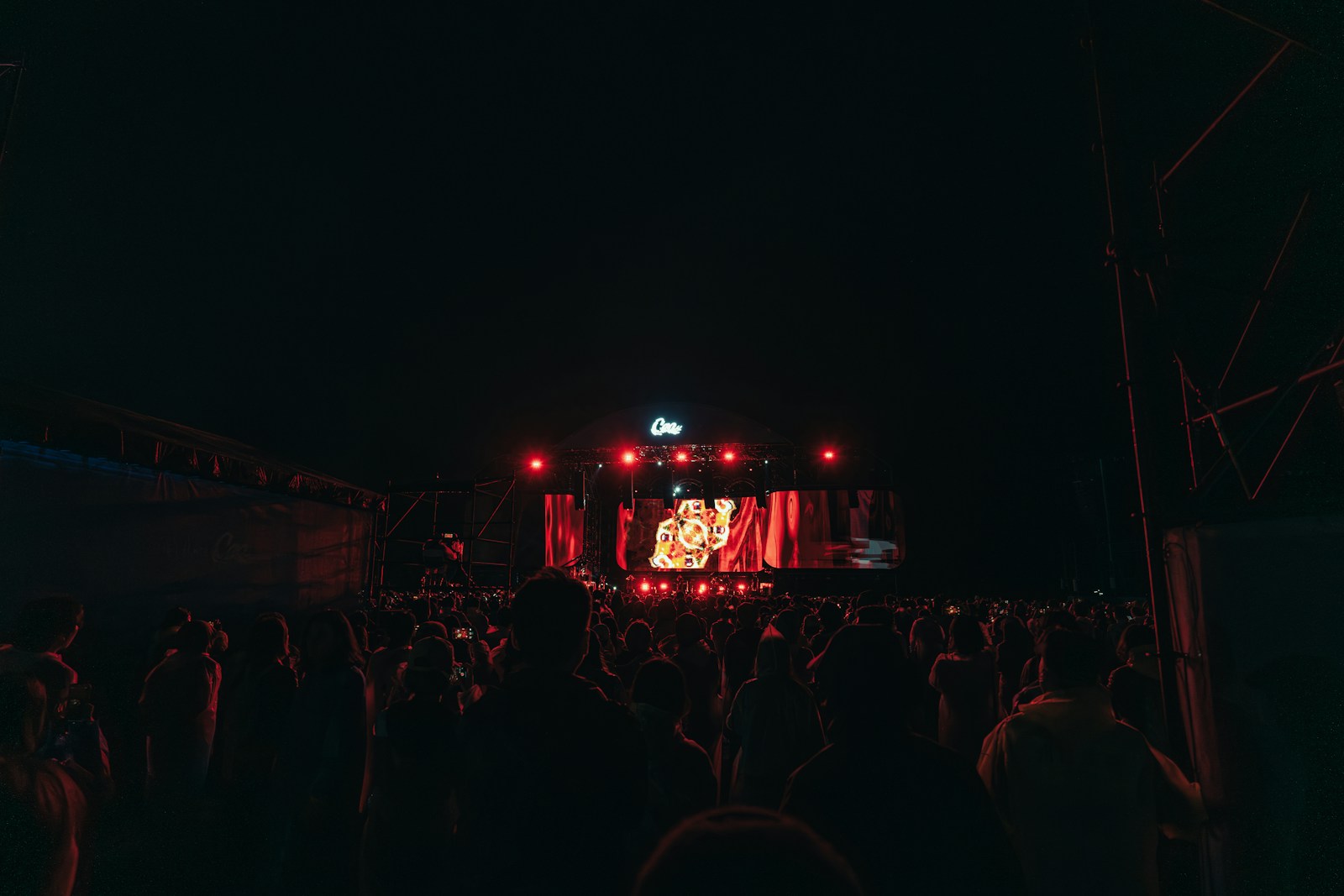
The Teatro Antico itself, by contrast, has become one of Europe’s most coveted open-air pop and rock venues. In 2026 the bill includes Bryan Adams on his Bare Bones tour (30 June), Luca Carboni (9 August), Claudio Baglioni (1 August), Il Volo (23 August), and Coez (10 September). It is not a jazz programme, nor a strictly classical one, but an Italian summer tradition in which the audience arrives in linen, the sun sets over the Ionian Sea mid-show, and the encore is usually delivered to a standing crowd facing volcanoes.
Ravello Festival, Amalfi Coast — July and August
The Ravello Festival is the quieter sibling to Taormina and, for listeners who prefer orchestral programming without stadium pop, often the better ticket. Its main venue is the terrace of Villa Rufolo, five hundred metres above the sea, with a stage that appears to float off the cliff. Wagner wrote the second act of Parsifal here in 1880; the festival’s defining concerts remain the annual dawn Wagner performance at dusk and the Mahler cycle that has anchored recent seasons.
Programming for 2026 leans on the Filarmonica della Scala, the RAI National Symphony, and a chamber strand that has included Mitsuko Uchida, Leonidas Kavakos, and András Schiff in recent editions. This is a festival where the audience reads programme notes, applauds only between movements, and books hotels a year out.
Puccini Festival, Torre del Lago — July and August
Built on the lake shore where Puccini himself lived and composed, the Puccini Festival stages the composer’s operas in a purpose-built open-air theatre near Viareggio. The 2026 programme will centre on Turandot, Tosca, and Madama Butterfly, in rotating productions that draw from Italian and international houses.
This is the specialist festival of the Italian summer: you come for Puccini, you come in August, and you leave humming music written within a kilometre of the stage you heard it on. The open-air acoustics are honest, which favours lyrical singers over dramatic ones. Buy aisle seats; the heat in the middle of the blocks is real.
Arena di Verona Opera Festival — June through September
Verona is the festival that most international audiences know by reputation, and for a reason. The Roman amphitheatre, which seats around fifteen thousand, is the largest surviving open-air opera venue in regular use in the world. A night at the Arena, candle in hand during the overture of Aida, is a spectacle even for listeners who do not normally seek out opera.
The 2026 season spans June to early September, with Aida, Nabucco, Carmen, Rigoletto, and a rotating Verdi anchor. Casting has become uneven in recent years as the house leans on stagione singers and occasional international stars; verify who is actually on the night you book. Budget seats on the stone steps (gradinata) cost around 30 euros and are the authentic experience, though they are harsh on the back after act two.
Home Festival and Rock in Roma — for the rock and indie traveller
For listeners whose summer playlist is less Verdi and more Arctic Monkeys, the circuit looks different. Rock in Roma, held across July at the Ippodromo Capannelle, books international touring acts the way a mid-sized British festival does. Home Festival, which migrates between Treviso and Venice depending on the year, has become the default Italian stop for indie, hip-hop, and mainstream rock alike.
Firenze Rocks is the grandest of the rock festivals, built inside the Visarno Arena at Parco delle Cascine, and consistently lands the biggest international headliners to play on Italian soil. Past editions have brought Metallica, Guns N’ Roses, and the Rolling Stones. The 2026 line-up, released in waves through spring, typically confirms by early May.
Jazz beyond Perugia — the Alps, Sardinia, and Ascona
Umbria Jazz is not the only serious jazz event of the Italian summer, merely the most famous. Clusone Jazz in the Bergamo pre-Alps, Time in Jazz in Berchidda, Sardinia (curated for decades by the trumpeter Paolo Fresu), and JazzAscona on the Swiss-Italian border all offer programming with a sharper curatorial voice and smaller crowds.
Time in Jazz in particular has become a pilgrimage for European listeners, with concerts in churches, piazzas, and among the cork oaks of the Gallura hills. The 2026 edition runs in the second week of August. Book Berchidda accommodation from Olbia or Tempio Pausania; the village itself has perhaps forty beds.
The small festivals worth the detour
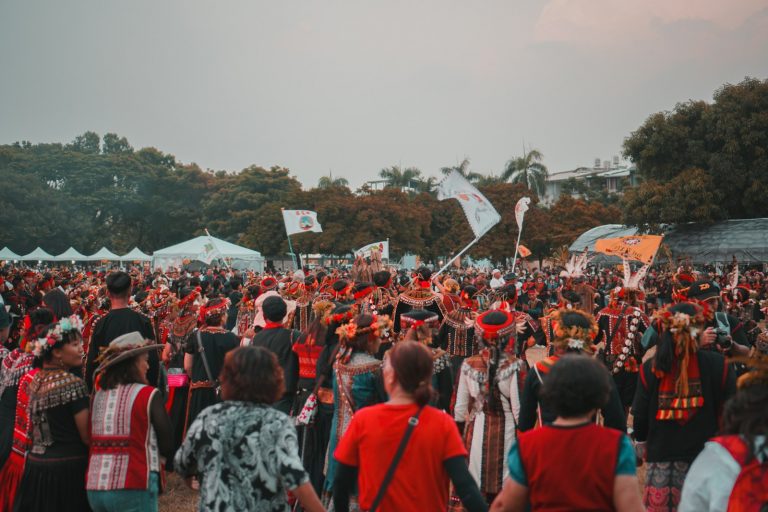
The larger events dominate the travel-press coverage, but the Italian summer has a deeper layer of smaller festivals that deliver concentrated programming to audiences of a few hundred. The Ferrara Busker’s Festival in late August turns the walled city into an open stage. La Notte della Taranta in Melpignano, Salento, is the closing ritual of Italian popular music each August, with a single night that draws over a hundred thousand people to dance pizzica in a square.
In the Alps, the Sounds of the Dolomites festival stages classical and jazz performances at altitude, with audiences hiking to the venue. In Umbria, Trasimeno Music Festival, curated by the pianist Angela Hewitt, delivers a week of chamber music in churches around the lake. Neither will appear in most international festival rankings, but both rank among the finest listening experiences available in Italy.
Emerging festivals worth planning a detour for
Beyond the core circuit, a handful of younger festivals have reached a level of programming that justifies booking around them rather than treating them as extras. They are less written-about than Umbria Jazz or Taormina, which paradoxically makes them easier to attend and sometimes more musically rewarding.
Pordenone Blues Festival — late June into early July. The oldest free-admission blues festival in Italy has, in recent editions, programmed international acts on the scale of Keb Mo, Walter Trout, and Popa Chubby alongside local Italian blues acts, all in piazzas across the Friuli-Venezia Giulia city. The free-entry model is unusual at this programming level; the festival runs on municipal and sponsor support. Pordenone sits on the Venice-to-Vienna rail line, which makes it an easy side-trip from a Venice base.
Locus Festival, Locorotondo (Puglia) — July into August. A rolling programme of concerts in the trulli district of Locorotondo and the surrounding Valle d’Itria. Past editions have brought James Blake, Kamasi Washington, Khruangbin, and the Sun Ra Arkestra. The setting is as much the draw as the music – a whitewashed hill town at around 400 meters elevation, with the concerts staged in courtyards and piazzas that seat a few hundred each. 2026 dates cluster around mid-July and late August.
Collisioni, Barolo (Piedmont) — first fortnight of July. An ambitious programme that blends pop, indie, and classical in the wine region south of Alba, with headline nights that have recently included Roger Waters, Iron Maiden, Sting, and Italian headliners like Marco Mengoni and Cesare Cremonini. The logistics work best with a rental car and an Alba or La Morra hotel base; the festival has expanded to multiple stages and the distances between venues reward mobility.
Arezzo Wave — late June. The grandfather of Italian independent-music festivals has evolved into a focused platform for emerging artists selected through regional heats, with an international headliner stage. For listeners who want to hear what the Italian indie scene will sound like in three years rather than what it sounded like three years ago, Arezzo Wave remains the best single bet. The city itself is quieter in festival week than Florence or Siena, which makes accommodation dramatically easier.
JazzMi, Milan — late October into mid-November. Strictly speaking outside the summer window, but worth mentioning because it programs many of the artists who also appear at Perugia and fits readers extending an Italian trip into autumn. JazzMi stages concerts across the Conservatorio, the Teatro dell’Arte, and smaller Milan clubs, which is a different texture of listening than the outdoor summer festivals and one some readers prefer.
Bologna Jazz Festival — October-November. Same calendar caveat. A highly curated programme with a historic bias toward European jazz and the ECM label aesthetic, staged largely at the Teatro Manzoni and smaller clubs in the city center. Autumn Bologna is, incidentally, an excellent standalone trip for any reader choosing a music-led itinerary outside the summer months.
Lineup specifics the travel press usually does not cover
The broad-stroke previews from Italian newspapers tend to name three or four headliners per festival and move on. For readers planning around specific artists, the fuller pictures for 2026’s flagship events are worth knowing.
At Umbria Jazz the opening days favour singer-songwriter programming, with Costello and Zucchero as the pop anchors and Sting the stadium-scale headliner. The jazz core runs through the middle days: Terence Blanchard’s E-Collective, Charles Lloyd’s quartet, Jon Batiste’s post-World Music Radio project, Snarky Puppy’s current touring lineup, and the Beat supergroup of Belew, Vai, Levin, and Carey, which is the strictly-once-in-a-lifetime booking on the 2026 programme. Club Jazz programming at the Teatro Morlacchi late each night features European jazz names who do not make the Arena lineup but reward the 11pm attention. Children’s programming at the Oratorio di Sant’Agostino during the day is free and surprisingly good.
At Taormina the Teatro Antico 2026 rock programme is heavier on Italian artists than recent years – Baglioni, Il Volo, Carboni, Coez – which tends to suit Italian listeners more than international visitors. The Bryan Adams date in late June is the largest English-language rock night; Mark Knopfler and Diana Krall have been rumoured to appear in late-summer slots that had not yet confirmed at the time of writing. The Opera Selection at Teatro Nazarena is steady-state repertoire staging, competent rather than spectacular.
At Ravello, the Wagner evening on the first Sunday of August has been the fixture point of the festival for two decades and regularly sells out nine months in advance. The orchestral programme is built around the Filarmonica della Scala in alternating residency with the RAI National Symphony. The chamber-music strand in 2026 leans toward the Takacs Quartet, the Jerusalem Quartet, and Daniil Trifonov’s announced recital – the last of which, if confirmed, will be the event of the season.
At Arena di Verona the 2026 season opens with Aida on 12 June and runs through early September. The headline nights on which the starrier international casting appears tend to be the mid-July weekends; the lower-profile week nights can be excellent value if the reader is flexible about casting. The gala concert in late August, which varies from year to year, is a reliable spectacle if not always a musical high point.
Transport, camping, and hotel calculus
The logistics of attending these festivals varies enormously by venue, and the sensible choice of base city rarely matches the instinct of a first-time visitor. Some specifics.
Umbria Jazz from Rome or Milan. Perugia sits roughly three hours by regional train from Rome Termini, with one change at Foligno, and three and a half hours from Milan via Florence. Frecciargento direct services add about thirty minutes of setup time but reduce the actual travel to under three hours from Rome. The cheaper strategy for most listeners is a Rome base with rail day-trips for specific nights, rather than a Perugia base at festival prices. Trains last-in, last-out after late-ending concerts require planning: the final Perugia-to-Foligno departure leaves around midnight on most evenings during the festival, with fewer options on Sundays.
Taormina from Catania. Taormina’s own train station sits well below the town, requiring a taxi or local bus climb up the hillside. Catania airport is the natural entry point; the A18 autostrada runs an hour to Taormina proper. Accommodation in Giardini Naxos, the beach town directly below Taormina, is typically 40-60 percent cheaper than equivalent rooms in Taormina itself, with a reliable 15-minute Interbus service up the hill.
Ravello from Naples or Sorrento. Ravello has no rail station. Access is by road from the Amalfi coast, which in July is synonymous with traffic jams. The local SITA bus service from Amalfi runs hourly; the drive from Naples takes around two hours without traffic and three to four hours in peak season. A Sorrento base with a rental car or a private driver for the festival evening is the approach most practiced regulars use.
Torre del Lago from Florence or Pisa. The Puccini Festival venue is most easily reached via Pisa airport, with a 40-minute drive. Lucca makes a pleasant accommodation base and offers more cultural range than Viareggio in the daytime hours.
Camping versus hotel. Italian music festivals have, in general, a weaker camping tradition than their UK or German equivalents. Rock in Roma and Firenze Rocks both offer official camping; most other festivals do not. Agriturismo accommodation within an hour’s drive of most venues is a strong middle-ground option, often costing less than a mid-tier hotel and providing breakfast and parking that marquee-town hotels omit.
Logistics that actually matter
Three things separate a good Italian festival trip from a bad one. First, transport. Umbria, Sicily, and Sardinia all require advance car rental bookings; the local trains thin out in August, and ride-hailing apps are unreliable outside Milan, Rome, and Naples. Second, accommodation timing. Rooms within walking distance of any marquee venue (Verona, Perugia, Taormina) sell out four to six months ahead at prices two to three times off-season. The workaround is to stay one town over and rent a small car. Third, ticket platforms. TicketOne dominates Italian ticketing but is not always the cheapest vendor for international buyers; the official festival websites regularly undercut it by five to ten percent once currency conversion and booking fees are counted.
A separate practical point: most outdoor Italian venues do not permit professional cameras, umbrellas, or glass bottles, and the security checks are more thorough than they were a decade ago. Arrive an hour before curtain and bring a paper ticket as backup; phone screens in direct sun still defeat scanners regularly.
Building the itinerary
The classic two-week Italian festival trip is Perugia to Ravello to Taormina, bookending July into early August. That schedule captures Umbria Jazz’s full run, a pair of nights at Ravello, and the Teatro Antico’s mid-summer programme, with rest days in Rome and on the Amalfi Coast between them. It is expensive in season, but the density of listening per euro is difficult to match elsewhere in Europe.
A cheaper alternative built around jazz alone: Perugia in the first half of July, Time in Jazz in Berchidda in mid-August, with a week on the Sardinian coast in between. Same duration, roughly half the cost, and arguably the deeper musical experience.
For readers building a summer playlist before the trip, our current history of jazz from origins to the present is a useful primer, and the running playlist guide works equally well as a shuffle during long train transfers between venues.
Which night would you build your July around — the Perigeo reunion in Perugia, Wagner at dusk above Amalfi, or opera under Etna? None of these is the wrong answer. The only wrong answer is deciding too late to get a seat.
Sources
- Umbria Jazz 2026 official programme
- Italian Opera Taormina Selection 2026
- Financial Times coverage of Italy’s music tourism economy
- La Repubblica — Musica
Sull'Autore